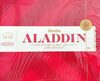
Is Cadbury Favourites ultra-processed?

Yes, it's ultra-processed
- 1 Unprocessed
- 2 Kitchen staple
- 3 Processed
- 4 Ultra-processed
Signs of ultra-processing in its ingredients:
- 55 ingredients
- 16 additives
- Nutri-Score E
Less processed chocolates
-
Dark absolute 99% cacao
Lindt Sprungli Sas
5 ingredients · no additives
 NOVA group
3
NOVA group
3
-
Excellence 95% Cocoa Ultimate Dark
Lindt
6 ingredients · no additives
 NOVA group
3
NOVA group
3
-
Supreme Dark 90% Cocoa
Lindt Excellence
5 ingredients · no additives
 NOVA group
3
NOVA group
3
-
green & black organic dark chocolate
Green & Black's
8 ingredients · no additives
 NOVA group
3
NOVA group
3
Ingredients
Ultra-processing Processing
sugar (processing marker), milk, cocoa butter (processing marker), cocoa mass, glucose syrup (ultra-processing marker), vegetable fat (processing marker), coconut (contains preservative 223), peanut, glace cherries (cherries, glucose fructose syrup (ultra-processing marker), colour (ultra-processing marker) (163), food acid (330)), cocoa powder, invert sugar (ultra-processing marker), wheat flour, biscuit pieces (contain wheat), emulsifiers (ultra-processing marker) (soy lecithin (ultra-processing marker), 476, 471), barley malt extract, gelling agents (ultra-processing marker) (1401, 440), golden syrup (ultra-processing marker), humectant (ultra-processing marker) (422), rice crisps, raising agent (500), salt (processing marker), hydrolysed milk protein (ultra-processing marker), maltodextrin (ultra-processing marker), gelatine (ultra-processing marker), acidity regulators (331, 575), starch (processing marker) (corn, tapioca), flavours (ultra-processing marker), colours (ultra-processing marker) (150c, 163, 120, 160c), vegetable oil (processing marker), enzymes (processing marker) (contain wheat), processing aid
Additives: E120 Cochineal , E1401 Acid-treated modified starch , E150c Ammonia caramel , E160c Paprika extract , E163 Anthocyanins , E322 Lecithins , E322i Lecithin , E330 Citric acid , E331 Sodium citrates , E422 Glycerol , E428 Gelatine , E440 Pectins , E471 Mono- and diglycerides of fatty acids , E476 Polyglycerol polyricinoleate , E500 Sodium carbonates , E575 Glucono-delta-lactone
As written on the pack
sugar, milk solids, cocoa butter, cocoa mass, glucose syrup, vegetable fat, coconut (contains preservative 223), peanut pieces, glace cherries (cherries, glucose fructose syrup, colour (163), food acid (330)), cocoa powder, invert sugar, wheat flour, biscuit pieces (contain wheat), emulsifiers (soy lecithin, 476, 471), barley malt extract, gelling agents (1401, 440), golden syrup, humectant (422), rice crisps, raising agent (500), salt, hydrolysed milk protein, maltodextrin, gelatine, acidity regulators (331, 575), starch (corn, tapioca), flavours, colours (150c, 163, 120, 160c), vegetable oil, enzymes (contain wheat), processing aid (sulphites)
What makes it ultra-processed
Cosmetic additives
Added to change how the food looks, feels or tastes, not to keep it safe. A hallmark of ultra-processed food.
- E120 Cochineal Carmine is a red colour made from cochineal insects.
- E1401 Acid-treated modified starch A food additive authorised for industrial food production.
- E150c Ammonia caramel Ammonia caramel is a brown colour made by heating sugars with ammonia compounds.
- E160c Paprika extract Paprika extract is a red-orange colour extracted from paprika peppers.
- E163 Anthocyanins Colours are substances which add or restore colour in a food, and include natural constituents of foods and natural sources which are normally not consumed as foods as such and not normally used as characteristic ingredients of food.
- E322 Lecithins Lecithins are fatty substances extracted mostly from soybeans, sunflower seeds or eggs, used as emulsifiers to keep fat and water mixed, for example in chocolate.
Show 10 more
- E422 Glycerol Glycerol is a sweet-tasting liquid used to keep products moist and soft.
- E428 Gelatine Gelatine is a gelling agent made from collagen in animal skin and bones.
- E440 Pectins Pectins are gelling agents extracted from citrus peel or apple pomace.
- E471 Mono- and diglycerides of fatty acids Mono- and diglycerides of fatty acids are made from fats and glycerol.
- E476 Polyglycerol polyricinoleate Polyglycerol polyricinoleate (PGPR) is an emulsifier made from castor oil.
- Colour Colours are added to restore colour lost in processing or to make a product look more appealing.
- Emulsifier Emulsifiers keep fat and water from separating, giving products a smooth, stable texture over a long shelf life.
- Flavouring Flavourings are concentrated aroma preparations that add or intensify a taste.
- Gelling agent Gelling agents such as pectin, gelatine or carrageenan set liquids into gels and stabilise textures.
- Humectant Humectants are substances which prevent foods from drying out by counteracting the effect of an atmosphere having a low degree of humidity, or promote the dissolution of a powder in an aqueous medium.
Substances rarely used in home kitchens
Refined or extracted in factories, such as syrups made from starch or isolated proteins. The other hallmark of ultra-processed food.
- Glucose Glucose, usually listed as glucose syrup, is cheap, keeps products moist and stops sugar from crystallising.
- Glucose syrup Glucose syrup is cheap, keeps products moist and stops sugar from crystallising.
- Hydrolysed proteins An ingredient mostly produced industrially and rarely used in home kitchens.
- Invert sugar Invert sugar is ordinary sugar split into glucose and fructose with acid or enzymes.
- Maltodextrin Maltodextrin is a white powder made by partly breaking down starch.
- Milk proteins Milk proteins are proteins separated from milk, such as caseinates and whey protein concentrates, added to adjust texture or raise protein content.
Show 1 more
- Fructose Fructose is the sugar found naturally in fruit and honey, but as an ingredient it is refined industrially, mostly from corn starch.
8 ingredients that would only make it processed
Kitchen staples like sugar, salt and oil. On their own they make a food processed, not ultra-processed.
- Chocolates Products in the category "Chocolates" are at least group 3.
- Salt Salt, added for taste and preservation.
- Starch Starch extracted from cereals or potatoes, used to thicken.
- Sugar Sugar refined from sugar cane or beet.
- Vegetable fat Vegetable fats are oils that are solid at room temperature, such as palm or coconut fat.
- Vegetable oil Vegetable oils are pressed or extracted from seeds, nuts and fruits.
- Sweet snacks Products in the category "Sweet snacks" are at least group 3.
- Enzyme Enzymes carry out traditional processes such as cheese making and baking.
Among 957 chocolates
From least to most processed, this one ranks 957th. 82% of the chocolates here are ultra-processed.

About this information
- Data from this product on Open Food Facts (barcode 9300617304043, last edited 11 September 2025), available under the Open Database License. If something is wrong or the recipe has changed, you can correct it there.
- Photo: Open Food Facts contributors, CC BY-SA 3.0.
- The NOVA group is an automated estimate from crowdsourced data: a missing or mistyped ingredient can change it.
- NOVA measures processing, not nutrition. For nutrition, Open Food Facts gives this product a Nutri-Score of E (from A, best, to E).
- General information, not medical or dietary advice. Check the pack if you have an allergy.