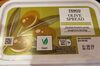
Is Tesco Light Olive Spread ultra-processed?

Yes, it's ultra-processed
- 1 Unprocessed
- 2 Kitchen staple
- 3 Processed
- 4 Ultra-processed
Signs of ultra-processing in its ingredients:
- 17 ingredients
- 8 additives
- Nutri-Score D
Less processed plant-based spreads


Ingredients
Ultra-processing Processing
water, olive oil (processing marker) 21%, rapeseed oil, palm oil, salt (processing marker) 1%, emulsifiers (ultra-processing marker) (mono- and diglycerides of fatty acids (ultra-processing marker), sunflower lecithin (ultra-processing marker)), stabiliser (sodium alginate (ultra-processing marker)), preservative (processing marker) (potassium sorbate (processing marker)), acidity regulator (lactic acid), colour (ultra-processing marker) (beta-carotene (ultra-processing marker)), flavouring (ultra-processing marker)
Additives: E160a Carotene , E160ai Beta-carotene , E202 Potassium sorbate , E270 Lactic acid , E322 Lecithins , E322i Lecithin , E401 Sodium alginate , E471 Mono- and diglycerides of fatty acids
As written on the pack
water, olive oil (21%), rapeseed oil, palm oil, salt (1%), emulsifiers (mono - and di-glycerides of fatty acids, sunflower lecithin), stabiliser (sodium alginate), preservative (potassium sorbate), acidity regulator (lactic acid), colour (beta-carotene), flavouring
What makes it ultra-processed
Cosmetic additives
Added to change how the food looks, feels or tastes, not to keep it safe. A hallmark of ultra-processed food.
- E160a Carotene Carotenes are orange-yellow pigments, either synthesised or extracted from carrots, algae or palm oil.
- E322 Lecithins Lecithins are fatty substances extracted mostly from soybeans, sunflower seeds or eggs, used as emulsifiers to keep fat and water mixed, for example in chocolate.
- E401 Sodium alginate A food additive used to dissolve, dilute, disperse or otherwise physically modify a food additive or nutrient without altering its function -and without exerting any technological effect itself- in order to facilitate its handling, application or use of the food additive or nutrient.
- E471 Mono- and diglycerides of fatty acids Mono- and diglycerides of fatty acids are made from fats and glycerol.
- Colour Colours are added to restore colour lost in processing or to make a product look more appealing.
- Emulsifier Emulsifiers keep fat and water from separating, giving products a smooth, stable texture over a long shelf life.
Show 1 more
- Flavouring Flavourings are concentrated aroma preparations that add or intensify a taste.
4 ingredients that would only make it processed
Kitchen staples like sugar, salt and oil. On their own they make a food processed, not ultra-processed.
- E202 Potassium sorbate Preservatives are substances which prolong the shelf-life of foods by protecting them against deterioration caused by micro-organisms and/or which protect against growth of pathogenic micro-organisms.
- Preservative Preservatives slow spoilage by microbes.
- Salt Salt, added for taste and preservation.
- Vegetable oil Vegetable oils are pressed or extracted from seeds, nuts and fruits.
Among 1,375 plant-based spreads
From least to most processed, this one ranks 1364th. 51% of the plant-based spreads here are ultra-processed.


About this information
- Data from this product on Open Food Facts (barcode 5000436197232, last edited 25 July 2026), available under the Open Database License. If something is wrong or the recipe has changed, you can correct it there.
- Photo: Open Food Facts contributors, CC BY-SA 3.0.
- The NOVA group is an automated estimate from crowdsourced data: a missing or mistyped ingredient can change it.
- NOVA measures processing, not nutrition. For nutrition, Open Food Facts gives this product a Nutri-Score of D (from A, best, to E).
- General information, not medical or dietary advice. Check the pack if you have an allergy.