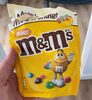
Is M&m's chocolate ultra-processed?

Yes, it's ultra-processed
- 1 Unprocessed
- 2 Kitchen staple
- 3 Processed
- 4 Ultra-processed
Signs of ultra-processing in its ingredients:
- 23 ingredients
- 11 additives
- Nutri-Score E
Less processed bonbons
-
chocolate orange dipped almonds
Deliciously Ella
7 ingredients · no additives
 NOVA group
3
NOVA group
3
-
Chocolate dipped almonds, vegan chocolate orange
Deliciously Ella
7 ingredients · no additives
 NOVA group
3
NOVA group
3
-
Chocolate dipped Almonds
Deliciously Ella
8 ingredients · no additives
 NOVA group
3
NOVA group
3
-
Salted Chocolate Dipped Almonds
Deliciously Ella
7 ingredients · no additives
 NOVA group
3
NOVA group
3
Ingredients
Ultra-processing Processing
sugar (processing marker), cacao mass, full cream milk powder (processing marker), cacao butter (processing marker), lactose (ultra-processing marker), whey powder (ultra-processing marker) (from milk), starch (processing marker), glucose syrup (ultra-processing marker), gum arabic (ultra-processing marker), e100 (ultra-processing marker), e133 (ultra-processing marker), e160a (ultra-processing marker), e162 (ultra-processing marker), e171 (ultra-processing marker), e172 (ultra-processing marker), soyalecithin (ultra-processing marker), dextrin (ultra-processing marker), carnauba wax (ultra-processing marker), coconut oil (processing marker), flavouring (ultra-processing marker) (natural vanilla extract), salt (processing marker)
Additives: E100 Curcumin , E133 Brilliant blue FCF , E1400 Dextrin , E160a Carotene , E162 Beetroot red , E171 Titanium dioxide , E172 Iron oxides and iron hydroxides , E322 Lecithins , E322i Lecithin , E414 Acacia gum , E903 Carnauba wax
As written on the pack
sugar, cacao mass, full cream milk powder, cacao butter, lactose, whey powder (from milk), starch, glucose syrup, stabiliser (gum arabic), colours (E100, E133, E160a, E162, E171, E172), emulsifier (soyalecithin), dextrin, glazing agent (carnauba wax), coconut oil, flavouring (natural vanilla extract), salt
What makes it ultra-processed
Cosmetic additives
Added to change how the food looks, feels or tastes, not to keep it safe. A hallmark of ultra-processed food.
- E100 Curcumin Colours are substances which add or restore colour in a food, and include natural constituents of foods and natural sources which are normally not consumed as foods as such and not normally used as characteristic ingredients of food.
- E133 Brilliant blue FCF Brilliant blue FCF is a synthetic blue dye, listed in the US as FD&C Blue No. 1.
- E1400 Dextrin Dextrin is starch partly broken down by heat or acid, used as a thickener, binder and coating.
- E160a Carotene Carotenes are orange-yellow pigments, either synthesised or extracted from carrots, algae or palm oil.
- E162 Beetroot red Colours are substances which add or restore colour in a food, and include natural constituents of foods and natural sources which are normally not consumed as foods as such and not normally used as characteristic ingredients of food.
- E171 Titanium dioxide Titanium dioxide is a white pigment.
Show 5 more
- E172 Iron oxides and iron hydroxides Colours are substances which add or restore colour in a food, and include natural constituents of foods and natural sources which are normally not consumed as foods as such and not normally used as characteristic ingredients of food.
- E322 Lecithins Lecithins are fatty substances extracted mostly from soybeans, sunflower seeds or eggs, used as emulsifiers to keep fat and water mixed, for example in chocolate.
- E414 Acacia gum Gum arabic (acacia gum) is the hardened sap of acacia trees, used to stabilise flavour emulsions in soft drinks and to coat sweets.
- E903 Carnauba wax Carnauba wax comes from the leaves of a Brazilian palm and gives sweets and coated chocolates their shine.
- Flavouring Flavourings are concentrated aroma preparations that add or intensify a taste.
Substances rarely used in home kitchens
Refined or extracted in factories, such as syrups made from starch or isolated proteins. The other hallmark of ultra-processed food.
- Glucose Glucose, usually listed as glucose syrup, is cheap, keeps products moist and stops sugar from crystallising.
- Glucose syrup Glucose syrup is cheap, keeps products moist and stops sugar from crystallising.
- Lactose Lactose is milk sugar, crystallised industrially from whey, a by-product of cheese making.
- Whey Whey is the liquid left over from cheese making, usually dried into a powder and used as a cheap source of milk solids, protein and lactose.
7 ingredients that would only make it processed
Kitchen staples like sugar, salt and oil. On their own they make a food processed, not ultra-processed.
- Salt Salt, added for taste and preservation.
- Starch Starch extracted from cereals or potatoes, used to thicken.
- Sugar Sugar refined from sugar cane or beet.
- Vegetable fat Vegetable fats are oils that are solid at room temperature, such as palm or coconut fat.
- Vegetable oil Vegetable oils are pressed or extracted from seeds, nuts and fruits.
- Sweet snacks Products in the category "Sweet snacks" are at least group 3.
- Milk powder Milk powder is milk with the water evaporated off: a preserved form of a whole food rather than an industrial extract.
Among 193 bonbons
From least to most processed, this one ranks 186th. 94% of the bonbons here are ultra-processed.

About this information
- Data from this product on Open Food Facts (barcode 5000159471916, last edited 19 March 2026), available under the Open Database License. If something is wrong or the recipe has changed, you can correct it there.
- Photo: Open Food Facts contributors, CC BY-SA 3.0.
- The NOVA group is an automated estimate from crowdsourced data: a missing or mistyped ingredient can change it.
- NOVA measures processing, not nutrition. For nutrition, Open Food Facts gives this product a Nutri-Score of E (from A, best, to E).
- General information, not medical or dietary advice. Check the pack if you have an allergy.