Is Cadbury Mini eggs bar ultra-processed?

Yes, it's ultra-processed
- 1 Unprocessed
- 2 Kitchen staple
- 3 Processed
- 4 Ultra-processed
Signs of ultra-processing in its ingredients:
- 27 ingredients
- 7 additives
- Nutri-Score E
Less processed chocolate candies
-
Dark milk chocolate with blood orange
Marks & Spencer
6 ingredients · no additives
 NOVA group
3
NOVA group
3
-
Dark Chocolate
Waitrose & Partners
3 ingredients · no additives
 NOVA group
3
NOVA group
3
-
Almond Butter & Salted Caramel Cups
Deliciously Ella
12 ingredients · no additives
 NOVA group
3
NOVA group
3
-
chocolate orange dipped almonds
Deliciously Ella
7 ingredients · no additives
 NOVA group
3
NOVA group
3
Ingredients
Ultra-processing Processing
milk, sugar (processing marker), cocoa mass, cocoa butter (processing marker), vegetable fats (processing marker) (palm, shea), whole milk powder (processing marker), emulsifiers (ultra-processing marker) (e442 (ultra-processing marker), e476 (ultra-processing marker), lecithins (ultra-processing marker)), rice starch (processing marker), thickener (ultra-processing marker) (gum arabic (ultra-processing marker)), flavourings (ultra-processing marker), colours (ultra-processing marker) (anthocyanins (ultra-processing marker), beetroot red (ultra-processing marker), curcumin (ultra-processing marker)), maize protein, the equivalent of 426 ml of fresh liquid milk in every 227 g of milk chocolate, milk chocolate (milk 20%), actual 23%, cocoa solids 20%, contains vegetable fats in addition to cocoa butter
Additives: E100 Curcumin , E162 Beetroot red , E163 Anthocyanins , E322 Lecithins , E414 Acacia gum , E442 Ammonium phosphatides , E476 Polyglycerol polyricinoleate
As written on the pack
milk**, sugar, cocoa mass, cocoa butter, vegetable fats (palm, shea), whole milk powder, emulsifiers (e442, e476, lecithins), rice starch, thickener (gum arabic), flavourings, colours (anthocyanins, beetroot red, curcumin), maize protein, may contain nuts, wheat, **the equivalent of 426 ml of fresh liquid milk in every 227 g of milk chocolate, milk chocolate: milk solids 20% minimum, actual 23%, cocoa solids 20% minimum, contains vegetable fats in addition to cocoa butter,
What makes it ultra-processed
Cosmetic additives
Added to change how the food looks, feels or tastes, not to keep it safe. A hallmark of ultra-processed food.
- E100 Curcumin Colours are substances which add or restore colour in a food, and include natural constituents of foods and natural sources which are normally not consumed as foods as such and not normally used as characteristic ingredients of food.
- E162 Beetroot red Colours are substances which add or restore colour in a food, and include natural constituents of foods and natural sources which are normally not consumed as foods as such and not normally used as characteristic ingredients of food.
- E163 Anthocyanins Colours are substances which add or restore colour in a food, and include natural constituents of foods and natural sources which are normally not consumed as foods as such and not normally used as characteristic ingredients of food.
- E322 Lecithins Lecithins are fatty substances extracted mostly from soybeans, sunflower seeds or eggs, used as emulsifiers to keep fat and water mixed, for example in chocolate.
- E414 Acacia gum Gum arabic (acacia gum) is the hardened sap of acacia trees, used to stabilise flavour emulsions in soft drinks and to coat sweets.
- E442 Ammonium phosphatides Emulsifiers are substances which make it possible to form or maintain a homogenous mixture of two or more immiscible phases such as oil and water in a foodstuff.
Show 5 more
- E476 Polyglycerol polyricinoleate Polyglycerol polyricinoleate (PGPR) is an emulsifier made from castor oil.
- Colour Colours are added to restore colour lost in processing or to make a product look more appealing.
- Emulsifier Emulsifiers keep fat and water from separating, giving products a smooth, stable texture over a long shelf life.
- Flavouring Flavourings are concentrated aroma preparations that add or intensify a taste.
- Thickener Thickeners, often gums or modified starches, make liquids more viscous so that a product feels richer than its ingredients alone would make it.
5 ingredients that would only make it processed
Kitchen staples like sugar, salt and oil. On their own they make a food processed, not ultra-processed.
- Starch Starch extracted from cereals or potatoes, used to thicken.
- Sugar Sugar refined from sugar cane or beet.
- Vegetable fat Vegetable fats are oils that are solid at room temperature, such as palm or coconut fat.
- Sweet snacks Products in the category "Sweet snacks" are at least group 3.
- Milk powder Milk powder is milk with the water evaporated off: a preserved form of a whole food rather than an industrial extract.
Among 773 chocolate candies
From least to most processed, this one ranks 703rd. 91% of the chocolate candies here are ultra-processed.

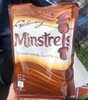


About this information
- Data from this product on Open Food Facts (barcode 7622201702915, last edited 11 April 2026), available under the Open Database License. If something is wrong or the recipe has changed, you can correct it there.
- Photo: Open Food Facts contributors, CC BY-SA 3.0.
- The NOVA group is an automated estimate from crowdsourced data: a missing or mistyped ingredient can change it.
- NOVA measures processing, not nutrition. For nutrition, Open Food Facts gives this product a Nutri-Score of E (from A, best, to E).
- General information, not medical or dietary advice. Check the pack if you have an allergy.